



By Bai Yuanqi
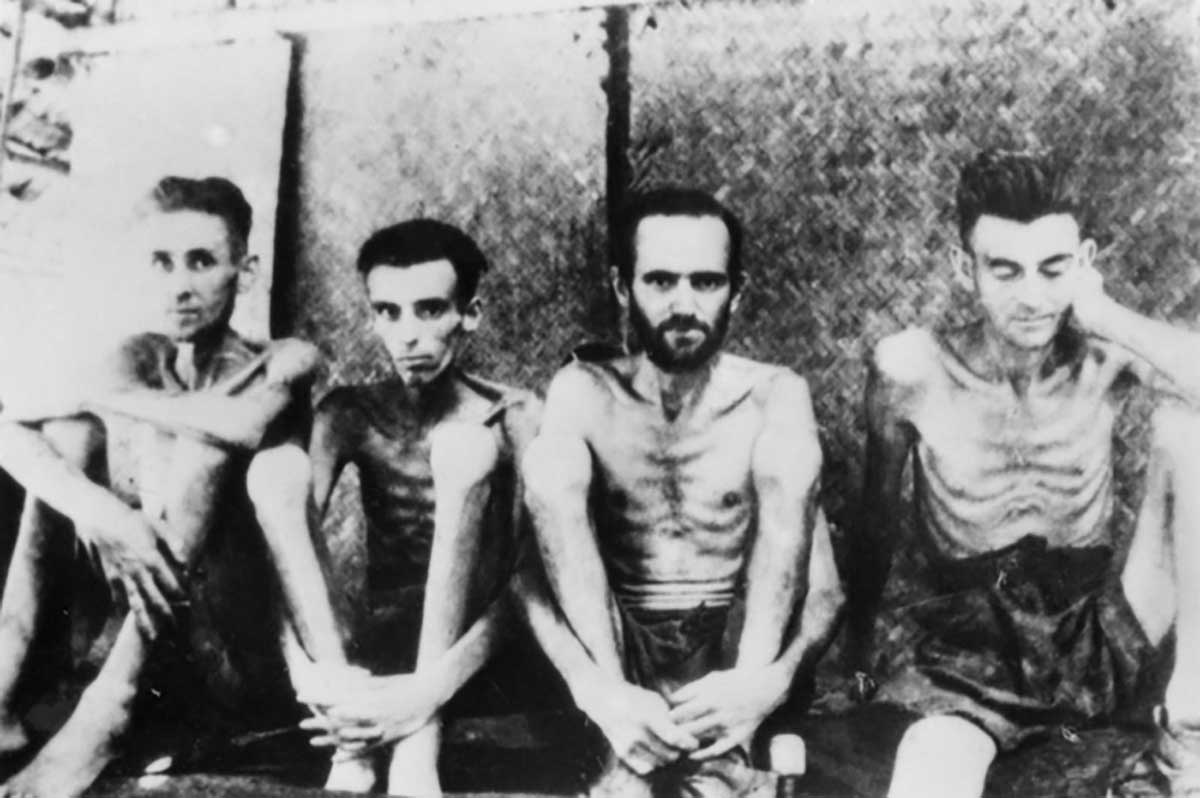
Allied prisoners of war during the construction of the Thailand-Burma Railway.
In 1942, in an attempt to open a land supply route between Thailand and Myanmar and occupy Southeast Asia, Japanese militarists forcibly conscripted more than 60,000 Allied prisoners of war (POWs) and hundreds of thousands of Asian laborers to construct the Thailand-Burma Railway. Harsh conditions and brutal abuse claimed more than 100,000 lives, earning the railway the grim moniker "Death Railway."
An Allied POW, more than 80 years ago, wrote that death is easy, but it is living that is the ordeal , laying bare the cruelty and brutality of the Japanese militarist aggressors.
Construction of the Thailand-Burma Railway commenced from Thanbyuzayat in Myanmar and Ban Pong in Thailand, with work advancing toward the middle from both ends. To rapidly mobilize labor, the Japanese military made so-called "ten promises" to Allied POWs in occupied areas such as Singapore, falsely promising good medical care, ample supplies, and comfortable accommodation to lure them to "new camps with better conditions." Meanwhile, the Japanese military lured Asian laborers with promises of high wages, later resorting to large-scale forced recruitment when the numbers fell short.
All the "promises" proved hollow. Allied POWs and Asian laborers were transported to Thailand, crammed like cargo into sealed metal boxcars. "A single boxcar, just seven meters long, was packed with 28 men. Many could not lie down during the four-day journey, food was extremely scarce, and some groups even went without food for more than 40 hours."
Upon arrival in Thailand, what awaited them was not "new camps," but miasma-shrouded tropical rainforests and mosquito-infested construction sites. To prevent the Allied POWs from banding together in resistance, the Japanese military dispersed them along hundreds of kilometers of the railway. Many were forced to march deep into the mountains immediately after getting off the trains, some for more than 300 kilometers. To evade Allied Powers' reconnaissance, the Japanese military forced them to march through the night. As an Allied POW wrote in his diary that we set out late at night in pouring rain with thick mud underfoot. Everyone was exhausted and could only support one another as we struggled through the darkness.
Upon reaching the camps, they found only unfinished bamboo-framed huts and a few tattered tents for shelter. Tents originally meant for only eight people were crammed with more than 20. An Allied POW later recalled that the camp was a quagmire. Mud coated everyone, soaked everything, seeped into the tents, and caked the bamboo sleeping platforms. We even slept covered in mud. Yet, before they could catch their breath, the Japanese soldiers drove them to the construction site with whips and bayonets.
Historical records show that the construction of the entire Thailand-Burma Railway required the excavation of four million cubic meters of earth, the blasting of three million cubic meters of rock, and the construction of 14 kilometers of bridges. With little heavy machinery available at the time, drilling, blasting, clearing debris, and hauling relied almost entirely on manual labor. It is estimated that laborers had to lay approximately 890 meters of track per day.
Prolonged starvation, backbreaking forced labor, and harsh weather took a devastating toll on the laborers' health. Wounds caused by sharp rocks during construction could easily develop into tropical ulcers so deep that the bone was exposed, while diseases such as malaria, cholera, and dysentery swept through the camps. The Japanese military even threatened bedridden laborers with food deprivation, forcing them to return to work despite their illnesses.
Ultimately, this 415-kilometer railway was built at the cost of the death of approximately 12,500 Allied POWs and more than 100,000 Asian laborers—an average of roughly 350 deaths per kilometer. Among them, Tamils and Chinese from British Malaya, as well as laborers from Myanmar, suffered the heaviest casualties, with their deaths accounting for about half of the total. Even after the Thailand-Burma Railway was completed, tens of thousands of Asian laborers were forcibly detained by the Japanese military and compelled to continue undertaking hazardous operation and maintenance work.
A researcher at the Thailand-Burma Railway Centre once said that we must preserve these historical remains and artifacts and pass down and tell the story of this history today. They are irrefutable evidence of the crimes of aggression committed by Japanese militarism. Remembering history is not about perpetuating hatred, but about strengthening our defenses against the resurgence of militarism, preventing such tragedies from recurring, and ensuring lasting peace.
Editor's note: Originally published on people.com.cn, this article is translated from Chinese into English and edited by the China Military Online. The information and opinions in this article do not necessarily reflect the views of eng.chinamil.com.cn.