



By Wang Changfan
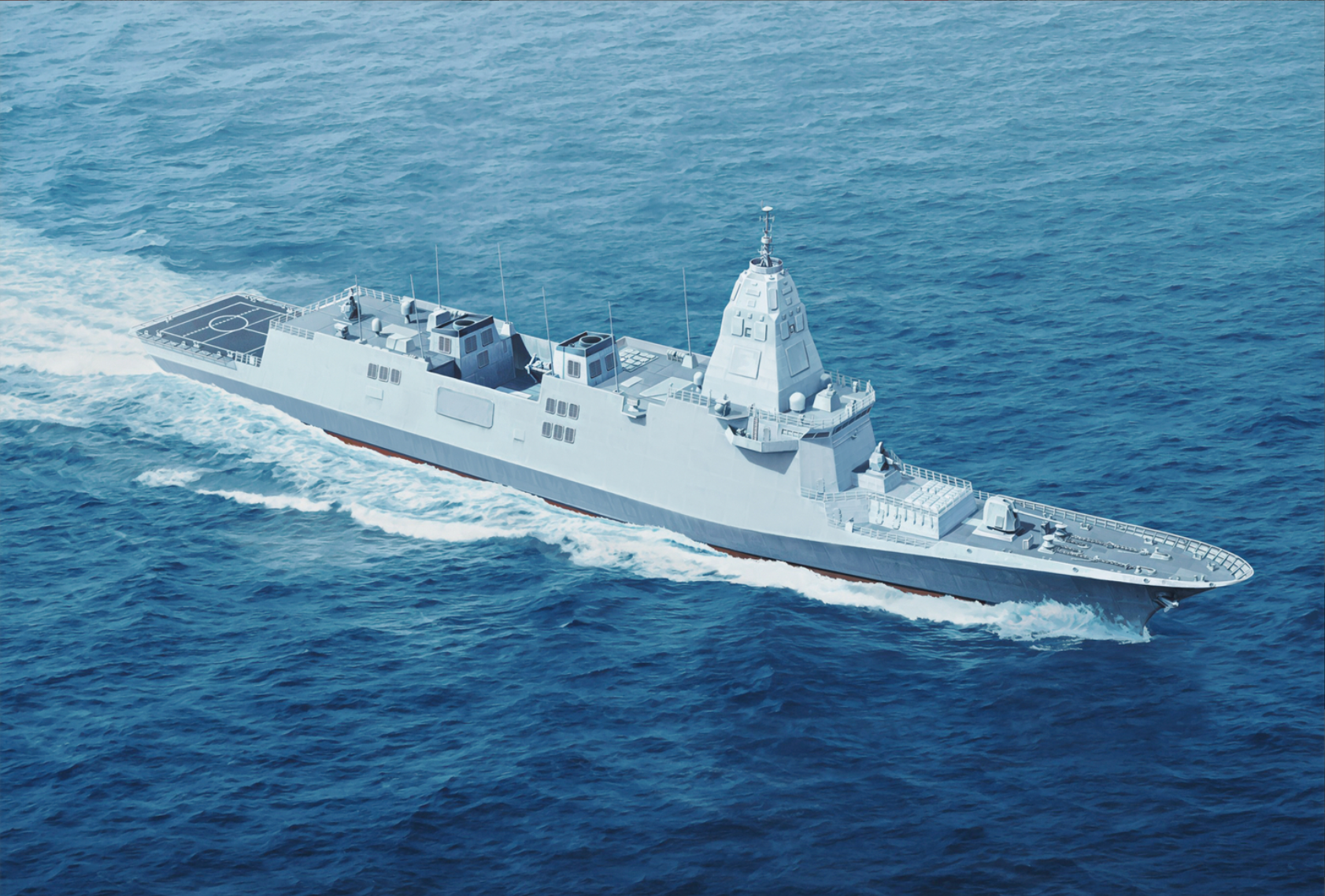
A rendering of the Korea Destroyer Next Generation (KDDX). (HD Hyundai Heavy Industries picture)
The Republic of Korea Navy's next-generation stealth guided-missile destroyer program, known as the Korea Destroyer Next Generation (KDDX) program, recently was forced to launch a second round of bidding after the first round proved fruitless. Frequent setbacks in key shipbuilding projects have exposed issues such as inadequate overall planning and coordination within the ROK's defense industry system, triggering widespread re-examination and skepticism regarding the ROK Navy's modernization drive.
In recent years, the ROK has launched multiple initiatives to advance its naval capabilities. First, it has adjusted its equipment development strategy in line with the evolution of warfare. The ROK Navy has continuously updated its development plans based on shifts in modes of maritime operations. Initially relying on an "ocean-going navy" strategy, it focused on traditional combat platforms such as large destroyers, frigates, and amphibious warships. With the rise of unmanned and intelligent warfare, the ROK has shifted its R&D focus, abandoning the light aircraft carrier program in favor of developing drone carriers.
Second, it has adopted a phased construction model to promote the iterative upgrading of naval vessels. The ROK Navy generally follows a phased R&D and construction approach with gradual adjustments. Taking the FFX frigate program as an example, the project has a long planning cycle and is implemented in multiple batches, leading to the successive development of the Incheon-class, Daegu-class, and Chungnam-class frigates. Each batch of frigates incorporates partial improvements to combat systems, sensors, and weapon configurations based on technological progress and mission requirements.
Third, the ROK continues to increase its defense budget to support naval projects. It has prioritized the navy in defense spending, raising annual allocations for the navy consistently, with the navy's budget growth rate long leading among all branches. These funds are primarily used to ensure the smooth progress of ongoing projects such as Aegis destroyers and FFX frigates.
Fourth, it relies on policy support to accelerate the development of the domestic shipbuilding industry. The ROK has issued planning documents, such as the Defense Industry Development Master Plan, which explicitly state that maritime weapon systems like warships should be designed and built by domestic shipyards to guarantee the market share of local firms. The government has also allocated special funds for technological R&D in areas including shipbuilding processes, shipborne equipment, and core materials.
Finally, the ROK conducts far-sea training exercises to test maritime combat effectiveness. In line with its equipment renewal, the ROK Navy regularly organizes ocean-going navigation to test the long-range mobility and sustained combat capabilities of its vessels. Additionally, the ROK frequently participates in US-led multinational maritime joint exercises. Through such training, the ROK Navy aims to familiarize itself with far-sea combat operating procedures, practice multinational coordinated operation protocols, and expand its maritime operation scope.
While the ROK Navy's modernization process continues to accelerate, its long-term development faces multiple challenges due to factors such as domestic politics, industrial structure, and international cooperation models.
The lack of policy continuity leads to frequent reversals of key projects. The construction of large naval platforms requires long cycles and heavy investment, demanding high policy stability. However, the ROK's domestic political landscape often leads to frequent adjustments in national defense strategy, causing drastic fluctuations in the progress of key projects.
High industrial monopoly and internal competition drag down progress. The ROK's shipbuilding industry is monopolized by HD Hyundai Heavy Industries and Hanwha Ocean. When competing for limited orders, these two companies often cause project stagnation due to profit distribution disputes. The ongoing KDDX program is a typical case. The continuous struggle between the two firms over issues such as design leadership, ownership of intellectual property, and bidding conditions has caused serious delays.
Significant external dependence limits strategic autonomy. In terms of equipment, the core combat systems, radar equipment, and air and missile defense weapons for the ROK Navy's main warships still require imports from the US, reflecting a high degree of external reliance and a lack of independent capabilities. Regarding command and operations, according to the current ROK-US military agreements, the US military retains wartime operational control (OPCON) over the ROK military until 2029. This means that operational planning and decision-making during joint exercises and operational deployments remain subject to the ROK-US joint command structure. In the foreseeable future, it will be difficult for the ROK Navy to form a completely independent strategic decision-making capability free from external constraints.