



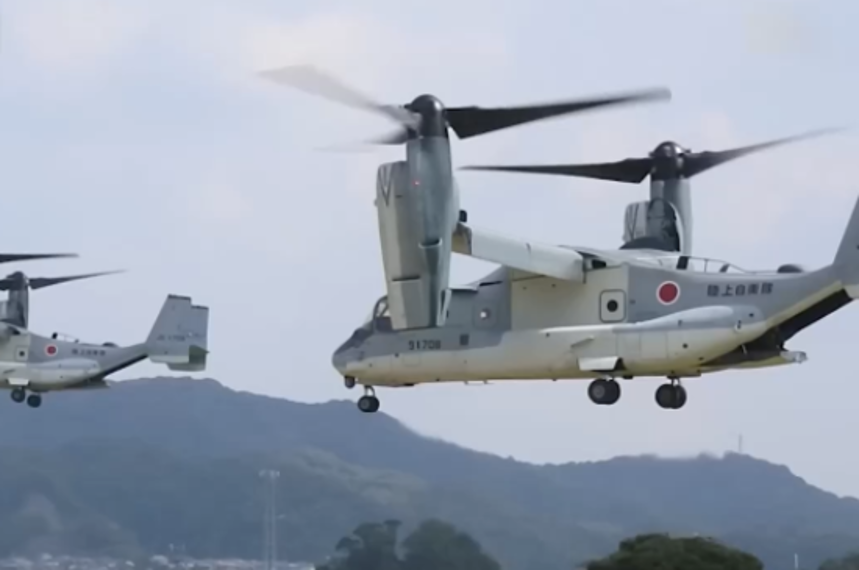
File photo: Japan's Osprey transport aircraft
According to reports, Japan and the US have recently held two large-scale joint exercises simultaneously in the Western Pacific, namely Resolute Dragon 2026 and Valiant Shield 2026.
Distinct focuses
Resolute Dragon 2026 ran from June 20 to 30, focusing on testing coordination procedures and interoperability between the Japan Self-Defense Forces (JSDF) and US forces in joint operations. During the exercise, Osprey transport aircraft of the Japan Ground Self-Defense Force (JGSDF) were deployed to Miyakojima for the first time. Valiant Shield 2026 ran from June 22 to July 1, focusing on training subjects such as ocean-going anti-submarine warfare, maritime blockade, and joint sea control in the Western Pacific.
The Resolute Dragon exercise is an operational and tactical-level exercise centered on amphibious operations, organized by the JGSDF Western Army and theIII Marine Expeditionary Forceof theUS Marine Corps, with its exercise area mainly covering Japan's Southwest Islands. The Valiant Shield exercise is a strategic and operational-level joint combat exercise organized byJapan's Joint Operations Command and the U.S. Pacific Command. It highlights maritime combat and integrated air and missile defense capabilities, covering the entire territory of Japan, as well as Pearl Harbor and Guam of the US.
Underlying motives behind deployment
What has drawn widespread attention is that the Typhon medium-range missile system and the High Mobility Artillery Rocket System (HIMARS) under the US Army's 3rd Multi-Domain Task Force will be temporarily deployed to Kanoya Air Base of the Japan Maritime Self-Defense Force (JMSDF)on the occasion of the Japan-US joint exercises from June to September.
If the US realizes the permanent deployment of the Typhon system under the pretext of exercises, it will become a key step in the deployment of US distributed precision strike fires in the Indo-Pacific.
In September 2025, the US deployed the Typhon system to Iwakuni under the name of the Resolute Dragon 2025 joint exercise. In 2026,the US side again deployed the Typhon and HIMARS at Kanoya Air Base under the name of the Valiant Shield exercise, and will not withdraw them after the exercise ends. In September, it will store the aforementioned equipment at US military bases in Japan under the name of the Orient Shield exercise. The attempt is to deploy the Typhon system along the First Island Chain, block key sea lanes with SM-6 missiles, and threaten strategic and operational depths with Tomahawk cruise missiles. This is a key link in the US First Island Chain deterrence system, posing a serious threat to the security of neighboring countries.
High Vigilance Warranted
In response to the launch of large-scale joint exercises such as Resolute Dragon by the JSDF and US forces in Kyushu, Okinawa, and other places, local residents and citizen groups across Japan have staged protests, demanding an end to the military exercises to avoid exacerbating regional tensions.
In recent years, Japan has continuously cooperated with the US military to improve the First Island Chain containment layout and enhance cross-domain coordination and forward deterrence capabilities of both sides along the First Island Chain. These moves, which will continue to undermine peace and stability in the Asia-Pacific region, warrant high vigilance.
The purpose of these Japan-US exercises is very clear. The exercises have shifted from the so-called traditional joint training to repeated drills by Japan and the US aimed at refining the alliance's military posture and rehearsing operational plans in response to the Taiwan Strait situation. What is particularly noteworthy is the acceleration of Japan's remilitarization process. The subjects of the two aforementioned exercises both reflect Japan's operational concept of preemptive strikes, completely tearing off the disguise of the "exclusively defense-oriented" principle.
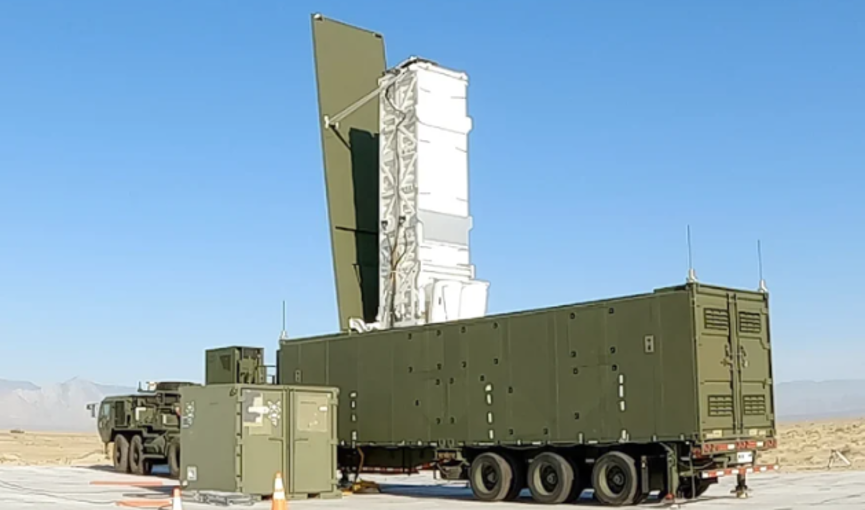
File photo: US Typhon medium-range missile system
Editor's Note: Originally published on military.cnr.cn, this article is translated from Chinese into English and edited by the China Military Online. The information and opinions in this article do not necessarily reflect the views of eng.chinamil.com.cn.