



By Zi Ge
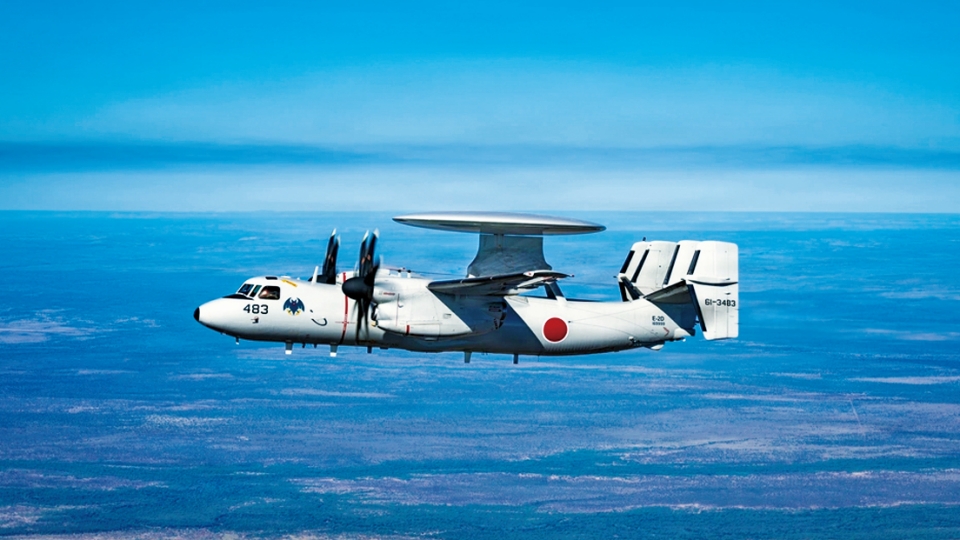
A Japan Air Self-Defense Force E-2D airborne early warning aircraft participates in an exercise in Australia on July 13.
On July 31, the Japanese government officially established the National Intelligence Agency, while the National Intelligence Council, chaired by Prime Minister Sanae Takaichi, held its inaugural meeting on the same day. The Japanese government stated that the new body will be responsible for coordinating key intelligence activities in areas such as national security and counter-terrorism, as well as countermeasures to foreign intelligence activities. Against the backdrop of Japan's accelerated adjustments to its security policy and continued expansion of military capabilities, the further concentration of intelligence power into the Prime Minister's Official has raised domestic concerns over the expansion of government power, privacy infringements, and the politicization of intelligence activities.
Strengthen Prime Minister's Office's control of intelligence work
Japan's new intelligence system adopts a two-tier structure featuring "deliberation by the council and coordination by the agency." The National Intelligence Council is chaired by the prime minister, with members including the chief cabinet secretary, chairman of the National Public Safety Commission, minister of justice, minister for foreign affairs, and minister of defense, and other cabinet ministers. It is responsible for deliberating on basic policies concerning key intelligence activities and countermeasures to foreign intelligence activities. As the secretariat of the National Intelligence Council, the National Intelligence Agency is responsible for policy planning, inter-agency coordination, intelligence aggregation, and comprehensive analysis.
According to the Japanese government, the National Intelligence Agency mainly undertakes four functions: first, consolidating information from departments such as the Ministry of Foreign Affairs, Ministry of Defense, National Police Agency, and Public Security Intelligence Agency to assess issues including economic security, critical technology protection, terrorism, and foreign influence activities; second, coordinating intelligence activities among various ministries and agencies; third, providing support for formulating Japan's first National Intelligence Strategy (tentative name); and fourth, coordinating countermeasures to threats such as espionage, foreign influence activities, and disinformation. Existing bodies within the various ministries and agencies will remain in place, while specific intelligence collection and law enforcement tasks will continue to be handled by the relevant authorities.
Some media outlets have referred to it as a "Japanese version of the CIA," but the agency currently functions primarily as the government's internal hub for intelligence coordination and analysis and has not gained new search or counter-espionage law enforcement powers through this reform. The Japanese government and the ruling party are also studying and formulating a so-called Counter-Espionage Law and a Foreign Agents Registration Act, and plan to establish a "Foreign Intelligence Agency" by the end of fiscal year 2027 to strengthen overseas intelligence collection capabilities.
Concentration of power serves military expansion and war preparations
At present, Japan has not established an independent oversight body for the National Intelligence Agency, nor does it require the government to regularly provide the National Diet with comprehensive reports on intelligence activities. Japanese opposition parties and some legal experts worry that "key intelligence activities" could be interpreted too broadly, potentially infringing on personal information and privacy or even serving the interests of particular political parties.
Pre-war Japan's "Special Higher Police," known as "Tokko," once monitored political thought and suppressed dissent in the name of maintaining the so-called "national polity." Although the current statutory functions of the National Intelligence Agency differ from those of the Tokko, the concentration of intelligence power and inadequate oversight have raised domestic concerns that the country may go back onto the old track.
Judging from Japan's recent moves to accelerate military expansion and war preparations while breaking through post-war security policy constraints, its establishment of the National Intelligence Agency appears to serve three main purposes.
First, to strengthen the Prime Minister's Office's control over security and intelligence affairs by further centralizing cross-agency intelligence consolidation and task coordination under the Prime Minister's Office.
Second, to provide intelligence support for long-range strikes and joint operations. The National Intelligence Council will deliberate on major issues concerning the development and operation of intelligence-gathering satellites, promoting the use of satellite imagery intelligence in government decision-making and Self-Defense Forces operations.
Third, to enhance Japan's independent intelligence capabilities and deepen intelligence cooperation with its allies. Japan still relies heavily on the United States for certain strategic early-warning capabilities and high-level military intelligence. Building a unified intelligence hub could both enhance Japan's independent intelligence collection and analysis capabilities and facilitate expanded intelligence cooperation with the United States, Australia, and the United Kingdom, and other countries.
Japan's latest reform is more than a simple administrative restructuring. It will provide intelligence support for its military buildup, development of long-range strike capabilities, and efforts to advance military integration with its allies, potentially creating new risks for regional security.