



By Jin Xuan
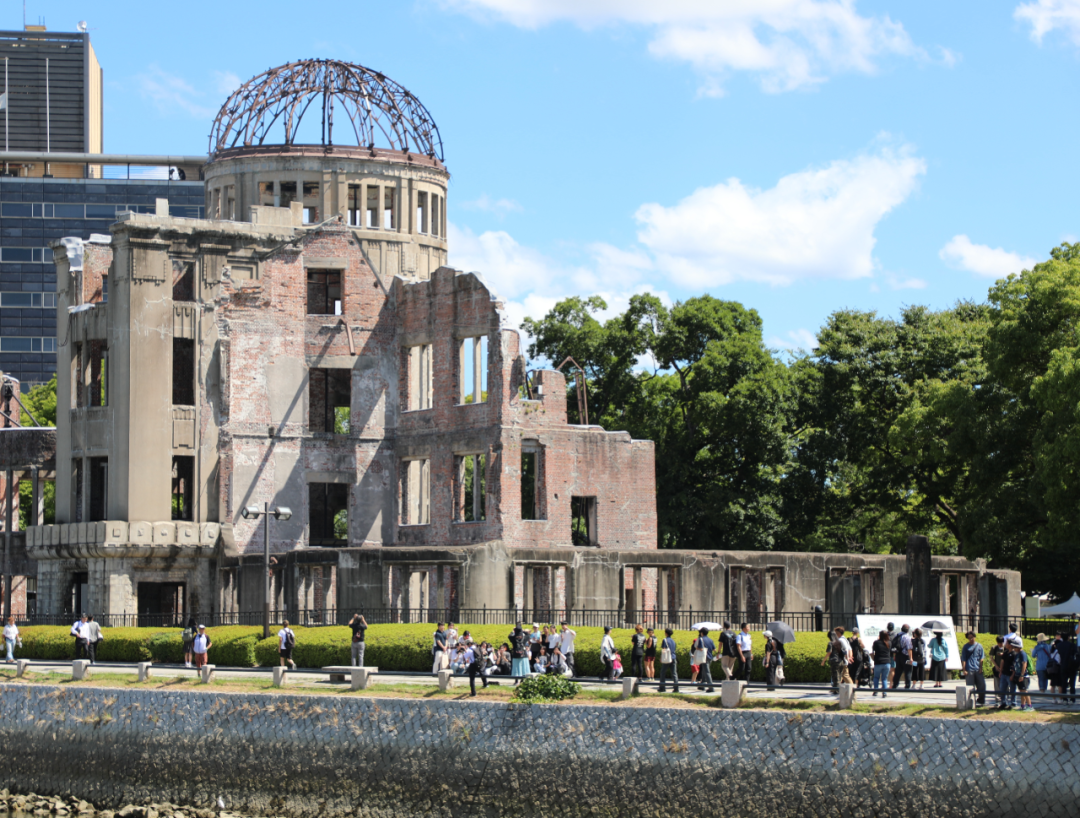
Ruins left by the atomic bombing, photographed near the Hiroshima Peace Memorial Parkin Hiroshima, Japan, on August 6, 2026. /Xinhua
The Nagasaki Atomic Bomb Museumin Japan is currently undergoing its first major exhibition update in 30 years. However, the proposed changes, once made public, sparked widespread concern and strong opposition from the international community. Under the current proposal, "Nanjing Massacre" would be replaced with "Nanjing Incident."
This seemingly minor attempt to distort history is in fact part of the historical revisionist tactics employed by Japanese right-wing forces as they advance their agenda step by step. The Nagasaki Atomic Bomb Museum was established to promote peace, but it is now being turned into a tool for whitewashing Japan's war of aggression and advancing the agenda of right-wing forces. This development is particularly egregious.
The Nanjing Massacre is a historical atrocity confirmed by the International Military Tribunal for the Far East and supported by overwhelming evidence. The term "massacre"is a characterization that clearly denotes large-scale, organized wartime atrocities, whereas "incident"is a neutral term that can refer to any accidental or ordinary historical occurrence. The primary danger posed by this alteration is that it seeks to strip the historical crime of its established legal characterization and trample on historical justice. The Nanjing Massacre was by no means an ordinary historical event, but a heinous crime against humanity. Erasing the characterization of the atrocities as a "massacre" is, in essence, an attempt to whitewash the crimes of aggression. Such a move reopens the historical wounds of the victimized peoples, desecrates historical truth, and, more seriously, challenges international judicial justice.
The Nagasaki Atomic Bomb Museum is a venue for peace education in Japan. For years, it has focused heavily on Japan's suffering from the atomic bombings, emphasizing a one-sided image of Japan as a "victim of war"while deliberately downplaying its historical culpability as an aggressor. This latest change in wording further exacerbates the imbalance in this historical narrative. For Japanese young people, a fragmented and whitewashed historical narrative may lead them to remember only their country's suffering while turning a blind eye to the grave crimes committed in Japan's wars of aggression, gradually fostering a one-sided and distorted view of history. Such subtle indoctrination will continue to erode Japanese society's capacity for historical reflection, creating fertile ground in public opinion for right-wing forces to deny Japan's aggression and undermine the postwar order.
In the long run, such actions will undermine the international consensus established after World War II and erode the foundations of peace and mutual trust. The established historical conclusions and international order resulting from the victory in World War II were forged with the blood of anti-fascist heroes around the world. Facing up to its war crimes and sincerely acknowledging and repenting for them constitute the political foundation for Japan's postwar return to the international community and for rebuilding and developing peaceful relations between China and Japan and across East Asia. Such distortion of history continues to erode Japan's national credibility and fracture the shared understanding of history in East Asia. When historical truth is obscured and culpability is downplayed, the cautionary significance of war will diminish, and the foundations of regional peace and stability will inevitably be weakenedas a result.
In Japan, denial, concealment, and efforts to erase the memory of the Nanjing Massacre have a long history. This latest episode is by no means an isolated incident. This historical backlash does not come solely from the Japanese government; right-wing forces within Japanese society are also fueling it. The historical record must not be tampered with, and irrefutable evidence can never be erased. Any attempt to downplay these crimes is nothing but self-deception. The historical facts of the Nanjing Massacre are recorded in international judicial records, archived in historical documents and the shared memory of humanity. They will not be shaken in any wayby Japan's attempts to distort history.
The right-wing forces' manipulation of distorted historical narratives will not solve Japan's domestic problems; instead, it will only provoke growing resentment from the outside world. In reality, neighboring countries, increasingly vigilant against Japan's neo-militarism, are responding in various ways to rein inJapan's right-wing forces and push back against their agenda. Indonesian netizens have come forward to recount how their elders, after suffering atrocities at the hands of the Japanese military, took their own lives in despair. Australian netizens have shared clear photographs showing Japanese troops beheading prisoners of war. South Korean scholars have also offered pointed advice to Japan, arguing that it must, above all, stop its provocations and seek lasting peace with its neighbors through sincerity.
If Japan allows its right-wing forces to continue racing down the wrong path, it will only end up isolating itself from the civilized world. Only by squarely confronting its history of aggression, sincerely reflecting on its past, and abandoning its fixation on historical revisionism can Japan truly shed its historical burden and earn the respect of the international community.
(Adapted from an article published on the WeChat account "zhejiangxuanchuan")