



Shi Wen
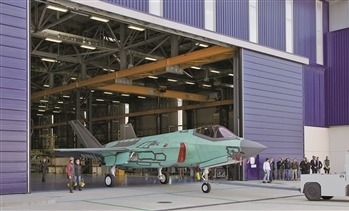
An F-35 fighter jets assembled at the Cameri plant in Italy.
Recently, US-made fighter jets purchased by several European countries have been delivered and entered service in succession. This trend stands in stark contrast to the high-profile push for the "ReArm Europe Plan/Readiness 2030" initiative, highlighting Europe's lagging indigenous research and development capabilities in military aviation and the setbacks facing multinational defense cooperation.
To accommodate the large-scale induction of F-35 fighter jets into service, several European countries have joined the aircraft's global supply chain in an effort to strengthen the role of their domestic defense industries. Europe has now established an initial regional support network for the F-35. However, these close ties have not brought genuine technological autonomy. In the F-35 program, European countries are mainly responsible for component manufacturing, assembly, logistics and maintenance, while key technologies, including the aircraft's core source code, avionics mission systems, stealth coatings and propulsion systems, remain under US control. This means that Europe has not achieved autonomy in military aviation equipment and has instead become even more dependent on the US. This predicament reflects the repeated setbacks encountered by Europe's drive for defense autonomy in the military aviation sector.
Over the past several decades, Europe has failed to develop a fifth-generation stealth fighter. Faced with the pressure of replacing large numbers of aging fourth-generation fighters approaching retirement, European countries have sought a technological breakthrough through the joint multinational development of a sixth-generation fighter. However, the Future Combat Air System (FCAS), jointly pursued by Germany, France and Spain, halted development of its core fighter aircraft in June this year. With no domestically developed fifth-generation fighter and its sixth-generation fighter program suffering a setback, Europe has seen the procurement of F-35 fighter jets become a practical choice for most of countries.
The difficulties facing defense integration in Europe's military aviation sector stem fundamentally from the wide divergence in the strategic objectives and interests of individual countries. Differences in geographic location have resulted in varying defense priorities across Europe. Eastern European countries, situated close to the front line of geopolitical conflict, seek to rapidly strengthen their emergency response and combat capabilities. They therefore tend to purchase mature equipment directly and show little willingness to participate in joint development projects with lengthy development cycles and high levels of uncertainty. Traditional military powers in Western Europe possess relatively comprehensive defense-industrial bases and are primarily concerned with protecting their domestic industrial interests and competing for leadership in regional defense. Southern European countries face less defense pressures and are reluctant to commit substantial fiscal resources. They therefore generally take a wait-and-see approach toward costly, long-term multinational defense cooperation projects. The inability to reconcile these differing priorities has made it difficult for Europe to formulate a unified defense development strategy and a coordinated resource investment plan.
In addition, the current fragmentation of Europe's defense industry has further compounded the difficulties of integration. Major European defense companies remain highly dependent on their home countries, with their development deeply intertwined with domestic employment, tax revenues and national defense-industrial strategies. To protect the competitive advantages of their domestic industries, European countries are reluctant to open up core technologies and R&D resources, creating formidable political and economic barriers to cross-border industrial integration. The development of modern high-end weaponry is characterized by high costs, high technical barriers and long development cycles. No single European country is capable of independently bearing the costs and risks of developing a next-generation fighter, while joint multinational programs are highly prone to conflicts over interests and disputes concerning responsibilities and authority.
Amid persistent strategic differences among European countries, the entrenched fragmentation of the defense industry, and continued dependence on foreign suppliers for key technologies, Europe's defense integration process faces long-term challenges.