



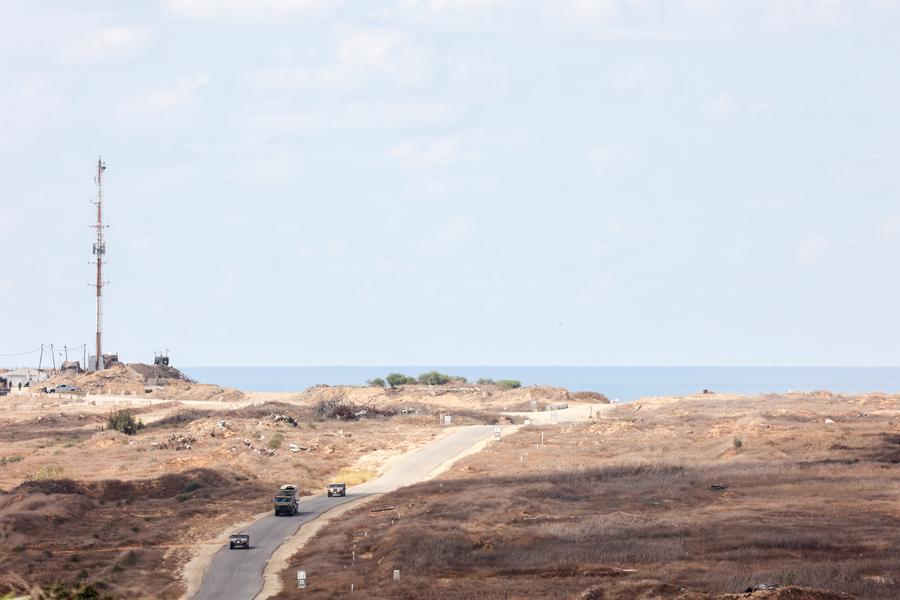
This photo taken from an area near Israel's southern border on Oct. 6, 2026 shows Israeli military vehicles moving inside the Gaza Strip. (Photo by Gil Cohen Magen/Xinhua)
by Xinhua writer Wang Zhuolun
JERUSALEM, Oct. 12 (Xinhua) -- From a hill on the outskirts of Sderot, the Israeli city closest to the Gaza Strip, the devastation across the border is clearly visible. Shattered buildings form a jagged skyline just a few kilometers away, yet they seem worlds apart.
Three years ago, on Oct. 7, 2023, a Hamas-led attack on southern Israel triggered a new round of bloody conflict in Gaza. Militants entered Sderot and stormed the local police station, where fighting raged through the night. Israeli forces eventually demolished the building as they retook it.
I still remember crouching amid the ruins as I covered the war's early days: fighter jets roared overhead, fear emptied the streets, and acrid smoke hung in the air. Not far away, each Israeli strike on Gaza sent another plume into the sky.
Back then, no one knew how long the war would last, much less how its repercussions would spread across borders and engulf much of the Middle East.
Three years on, I returned. The ruins are gone. A memorial square now stands where the police station once stood, with newly planted greenery and paved walkways. Visitors stop to look around. Sderot is gradually reclaiming a sense of normalcy.
It took less than three years to turn ruins into a square. But how long will it take to turn war into peace?
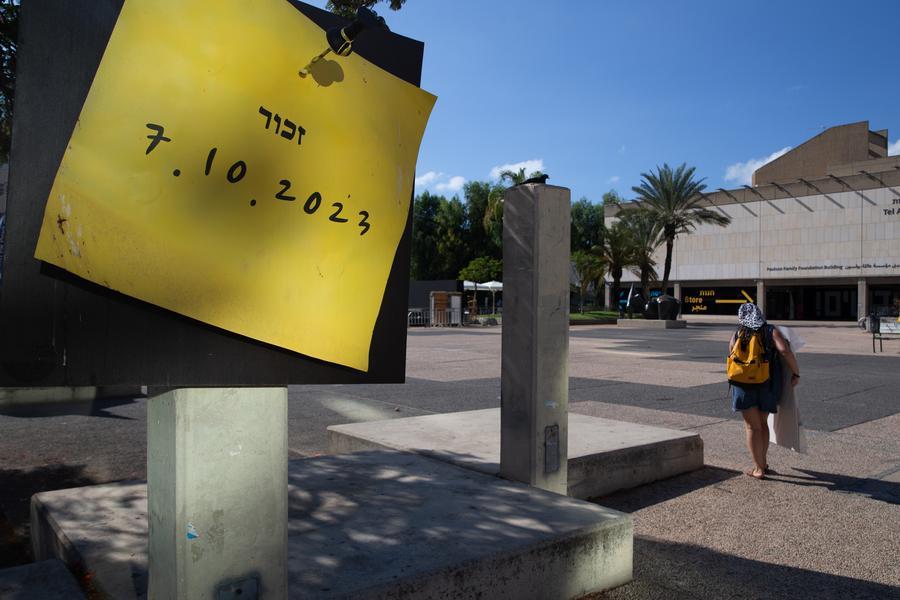
A pedestrian walks past a memorial site for the latest round of Gaza conflict in Tel Aviv, Israel, Oct. 6, 2026. (Xinhua/Chen Junqing)
In the West Bank city of Bethlehem, Ali Mansour told me he had been out of work since the war began. Before the conflict, he traveled daily to work in Israeli-controlled areas. Afterward, Israel sharply restricted work permits for Palestinian workers, leaving him without a job.
What he has been waiting for, Mansour said, is not just a job, but the chance to regain the dignity of an ordinary working life.
In Jerusalem's Old City, Palestinian souvenir seller Rami Hamdan has felt the war's toll in another way. In once-bustling shops, merchants now sit idle, waiting for customers who rarely come.
"I stopped watching the news long ago. I don't even want to know what's happening anymore," he said. "I just want to shut myself off from this world of endless war."
Perhaps this is war's most enduring consequence. An explosion has a time, a place, and a casualty count. It becomes a headline, then a photograph. But long after the smoke clears, war persists in less visible ways: in families mourning loved ones, workers waiting for jobs that never return, children growing up under air raid sirens, and ordinary people facing each day with uncertainty.
Over the past three years, the fighting has widened into a regional conflict.
It spread from Gaza to the Israel-Lebanon border and the Red Sea before escalating into large-scale direct military confrontations involving Israel, the United States, and Iran. Rockets, missiles, and drones repeatedly crossed Middle Eastern skies.
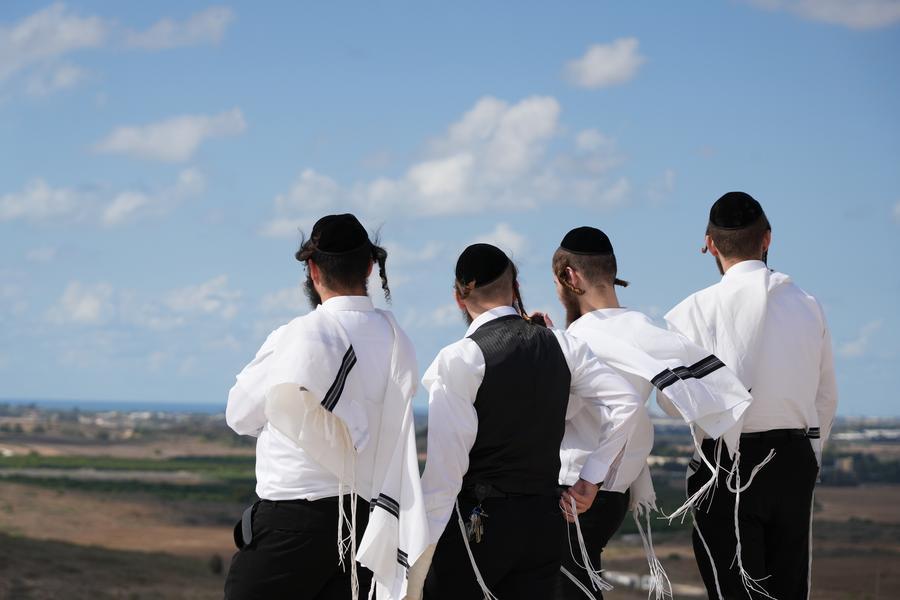
Jewish people look toward the nearby Gaza Strip in Sderot, southern Israel, Oct. 6, 2026. (Xinhua/Wang Zhuolun)
Over these three years, I have written "escalation" and "ceasefire takes effect" more times than I can remember. Again and again, just as a war seemed to be nearing its end, another round of fighting began.
The expanding battle fronts kept testing what I thought I understood about war. As a frontline correspondent, I have learned that the worst never stays the worst for long, and what looks like an ending can turn out to be the prelude to something worse.
Before leaving Sderot, I met Shalom Levi, a local resident. Now 60, he has lived his whole life near the Gaza border.
In Hebrew, "shalom" is both a greeting and the word for "peace." Levi told me his parents chose the name to express their hope for peace.
Behind him stood the memorial square built on the ruins of the police station. Beyond it lay Gaza, still scarred by war.
New monuments have risen from rubble. New grass has taken root in scorched earth.
But a man named "Peace" is still waiting for his name to become more than a promise.