By Le Shui
On October 7, the Palestinian Islamic Resistance Movement (Hamas) launched a raid on Israel and the latter immediately declared a state of war with a fierce counterattack, which triggered a new round of conflict between the two countries. According to media reports, more than 4,200 people have been killed and more than 10,000 injured in the conflict so far.
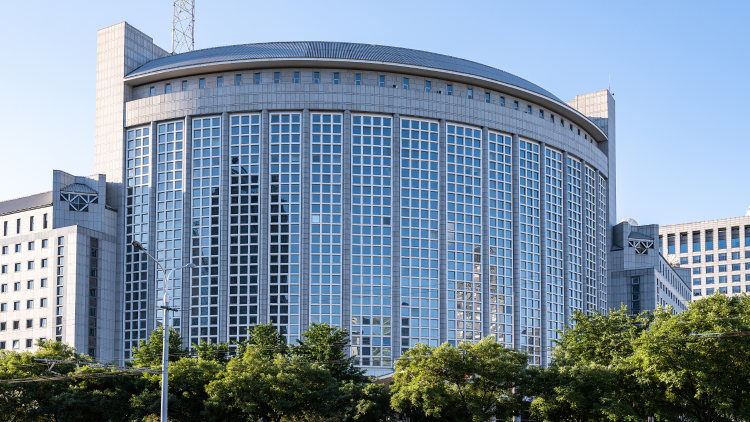
The rapid escalation of the Palestinian-Israeli conflict has drawn wide attention from the international community. UN Secretary-General Antonio Guterres immediately issued a statement urging all parties to avoid the expansion of the conflict through diplomatic efforts. On October 8, the Chinese Foreign Ministry spokesperson said at a press conference that the repeated conflicts between Palestine and Israel speak volumes for the necessity not to continue the long stagnation of the peace process, and the fundamental way out of the Palestinian-Israeli conflict is to implement the two-state solution and establish an independent Palestinian state.
The century-old conflict between Israel and Palestine is complex and intractable. The root cause is that Israelis and Palestinians cannot coexist peacefully in the Palestinian regions.
In 1947, the United Nations General Assembly (UNGA) adopted Resolution 181, deciding to establish a Jewish state and an Arab state respectively in order to implement partitioned administration within the Palestinian areas. Israel declared its statehood shortly after the adoption of the resolution. However the Arab countries considered the resolution unfair to Arabs, thus the first Middle East war broke out and the plan for the statehood of Palestine has been repeatedly postponed since then. After five Middle East wars, the land originally allotted to Palestinians was continuously divided and encroached upon by Israel and neighboring countries, so the goal of Palestinian statehood was getting even more distant. Later on, amid the widening power disparity between Israel and Palestine, the Palestinian National Liberation Movement (Fatah), the legitimate representative of Palestinians, gradually abandoned the strategy of armed combat and switched to seeking statehood through peace talks with Israel.
In the 1990s, the Fatah led by Yasser Arafat and the Israeli government led by Yitzhak Rabin signed the Oslo Accords, initiating the Middle East peace process of "land for peace". Under the deal, Israeli forces would withdraw from Gaza and Jericho where the Palestinians were to exercise limited autonomy, and the two sides would recognize each other's right to subsistence. The persistent Palestine and Israel dispute lasting a century thus ushered in the dawn of peace for the first time. However, in the wake of Rabin's assassination, extremist forces on both sides gained the upper hand and the implementation of the Oslo Accords was suspended indefinitely. Particularly, the rising Hamas advocating armed struggles stands up to the Fatah, which not only destroys the internal unity of Palestinians but also makes the whiff of gunpowder intensify between the two peoples.
The Middle East peace process has been stalled for more than 20 years, and the Israel-Palestine conflict has never subsided during this period. In 2002, the 14th Arab League Summit put forward the Arab Peace Initiative designed to end the Arab-Israeli dispute. This initiative urges Israel to withdraw troops from all Arab territories occupied in the 1967 Third Middle East War and acknowledge the establishment of a sovereign and independent Palestinian State with East Jerusalem as its capital. The Arab countries are requested to sign peace agreements with Israel and gradually establish normal relations with it. The initiative contains the main content of the “two-state solution” and is regarded as an important proposal put forward by Arab countries in a bid to rapidly quell the Palestinian-Israeli conflict, ease the regional security situation and achieve lasting peace in the Middle East, which is widely supported by major countries in the world including China.
Although the two-state solution has won universal recognition from the international community, the implementation of it is still filled with difficulties. The current Netanyahu government is hawkish on the Palestinian issue and steadfastly rejects the return of Palestinian refugees to their homelands. In addition, the Palestinian economy is controlled by Israel, and even its own customs duties need to be collected and transferred by the latter, greatly impairing the autonomy of Palestinians. The division between the Fatah and the Hamas also foreshadows a bumpy road to future state unification of Palestinians.
Nevertheless, the two-state solution still plays a fundamental role in solving the Palestinian-Israeli issue. Although a long and arduous road ahead, the realization of lasting peace in the Middle East is the common aspiration of all countries in the world. Therefore, the international community still needs to make sustained efforts for a ceasefire between the two sides and the implementation of the two-state solution. In particular, against the current backdrop of the escalating situation, both Palestine and Israel should keep restraint and resume peace talks to avoid more serious humanitarian crises.
This massive re-eruption of the Palestinian-Israeli conflict reminds the whole world that no progress means regression for the Middle East peace process, and the Palestinian issue cannot be put off any longer. Piecemeal crisis management fails to get to the root of the issue. The international community should promote the effective implementation of the two-state solution as soon as possible with the utmost sense of urgency, so as to avoid the Palestinian-Israeli issue caught in a downward spiral.
Editor's note: Originally published on china.com.cn, this article is translated from Chinese into English and edited by the China Military Online. The information and opinions in this article do not necessarily reflect the views of eng.chinamil.com.cn.